SOFF X · AIHujjatingizni AI yaratsinSovg'ani oling
Mahsulot tavsifi
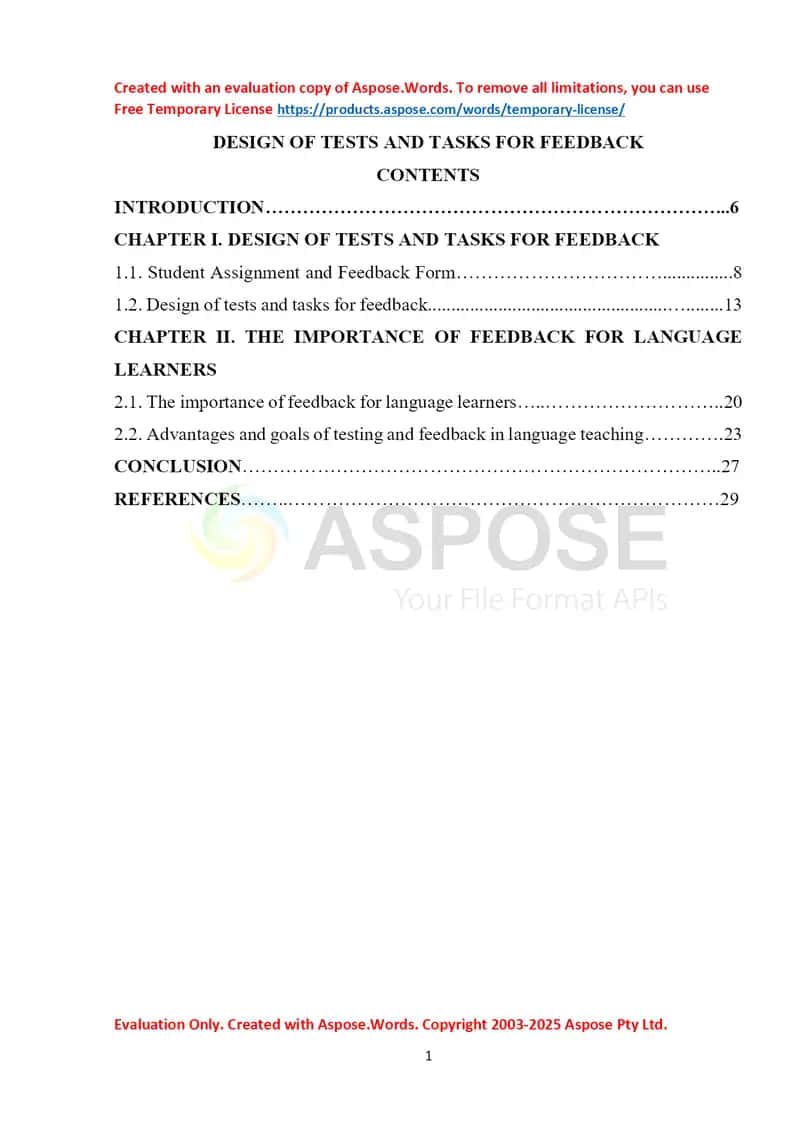
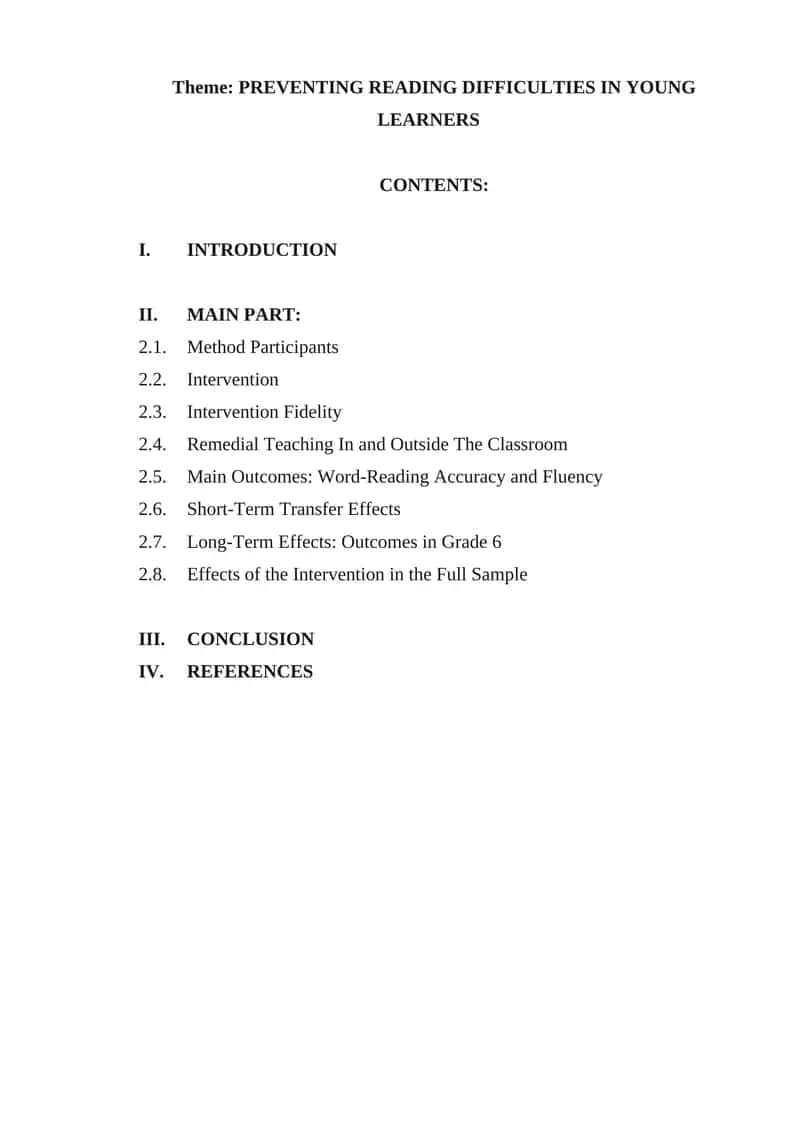
CONTENTS INTRODUCTION.. 3 CHAPTER I. THEORETICAL FOUNDATIONS OF SCAFFOLDING FOR LOWER-PROFICIENCY LEARNERS. 5 1.1. Definition and Principles of Scaffolding. 5 1.2. Characteristics and Learning Needs of Lower-Proficiency Learners 8 1.3. The Importance of Scaffolding in Language Development 12 CHAPTER II. PRACTICAL APPLICATION OF SCAFFOLDING TASKS IN LANGUAGE CLASSROOMS. 17 2.1. Types of Scaffolding Tasks and Support Strategies. 17 2.2. Classroom Activities and Teacher Guidance for Lower-Proficiency Learners 20 2.3. Challenges and Recommendations for Effective Scaffolding. 23 CONCLUSION.. 28 GLOSSARY.. 30 REFERENCES. 33 The Internet Resources 35 INTRODUCTION The actuality and importance of the theme. In the contemporary landscape of globalized education and mixed-ability classroom demographics, managing the variance in students’ initial language proficiency remains one of the most critical challenges for pedagogical science. Within this framework, the strategic implementation of instructional scaffolding—defined as a temporary, supportive framework engineered by educators to assist learners in performing tasks that are just beyond their autonomous reach—stands out as an essential pedagogical necessity for lower proficiency English as a Foreign Language (EFL) learners. Language acquisition cannot occur unless the target linguistic input is converted into comprehensible intake, a cognitive transition that is often obstructed for low-level students due to immediate cognitive overload and systemic communicative anxiety. In accordance with the Decree of the President of the Republic of Uzbekistan dated May 19, 2021, No. PQ-5117 “On measures to bring the popularization of foreign language learning in the Republic of Uzbekistan to a qualitatively new level”, educational institutions are mandated to scale foreign language competencies to a qualitatively new, internationally competitive standard [1] . Traditional pedagogical frameworks, however, frequently implement top-down, uniform syllabi that present complex communicative tasks without sufficient cognitive or structural buffers. For lower proficiency learners, this “one-size-fits-all” exposure leads to affective filter inflation, causing learned helplessness, disengagement, and academic stagnation. Contemporary applied linguistics and educational psychology, rooted in Lev Vygotsky’s Zone of Proximal Development (ZPD) and Jerome Bruner’s scaffolding theory, demonstrate that when tasks are systematically deconstructed into micro-steps and reinforced with temporary textual, visual, and cooperative structures, lower proficiency learners can successfully navigate complex communicative cycles without the dilution of curriculum standards. For students in Uzbekistan, ensuring successful integration into a globalized knowledge economy requires that no learner tier is marginalized within the educational continuum. The purpose of the course paper. The primary purpose of this course paper is to theoretically analyze the cognitive and socio-constructivist mechanisms of instructional scaffolding, and to develop a comprehensive matrix of task-based scaffolding strategies designed to reduce cognitive load and enhance the productive and receptive language competencies of lower proficiency EFL learners. The object of the study. The main object of the study is the pedagogical and instructional process of foreign language education for mixed-ability and low-proficiency student cohorts within secondary and higher education tracks. The subject of the study. The subject of the study encompasses the specific architectural typologies of scaffolding (including sensory, graphic, linguistic, and procedural scaffolding), macro-to-micro task design adaptations, error-tolerance parameters, and interactive task configurations (such as sentence frames, graphic organizers, vocabulary banks, and peer-assisted modeling) customized for lower proficiency learners. The hypothesis of the course work. If instruction for lower proficiency EFL learners systematically integrates structured, multi-dimensional scaffolding techniques into communicative tasks, then these students will demonstrate a significant increase in task completion accuracy, a measurable reduction in communicative anxiety, and accelerated progress toward autonomous language output compared to those exposed to un-scaffolding, uniform task parameters. The structure of the course work. The structure of the course work consists of an introduction, two chapters (the first focusing on the theoretical foundations of Vygotsky’s ZPD, Bruner’s Scaffolding Theory, and cognitive load management; the second exploring practical task-deconstruction models, the engineering of linguistic and visual anchors, classroom implementation metrics, and empirical evaluation frameworks for measuring student autonomy), a conclusion, a glossary, and references. [1] Decree of the President of the Republic of Uzbekistan dated May 19, 2021, No. PQ-5117 “On measures to bring the popularization of foreign language learning in the Republic of Uzbekistan to a qualitatively new level”.
Muallif

- Hujjatlari
- 854
- Sotilgan
- 305